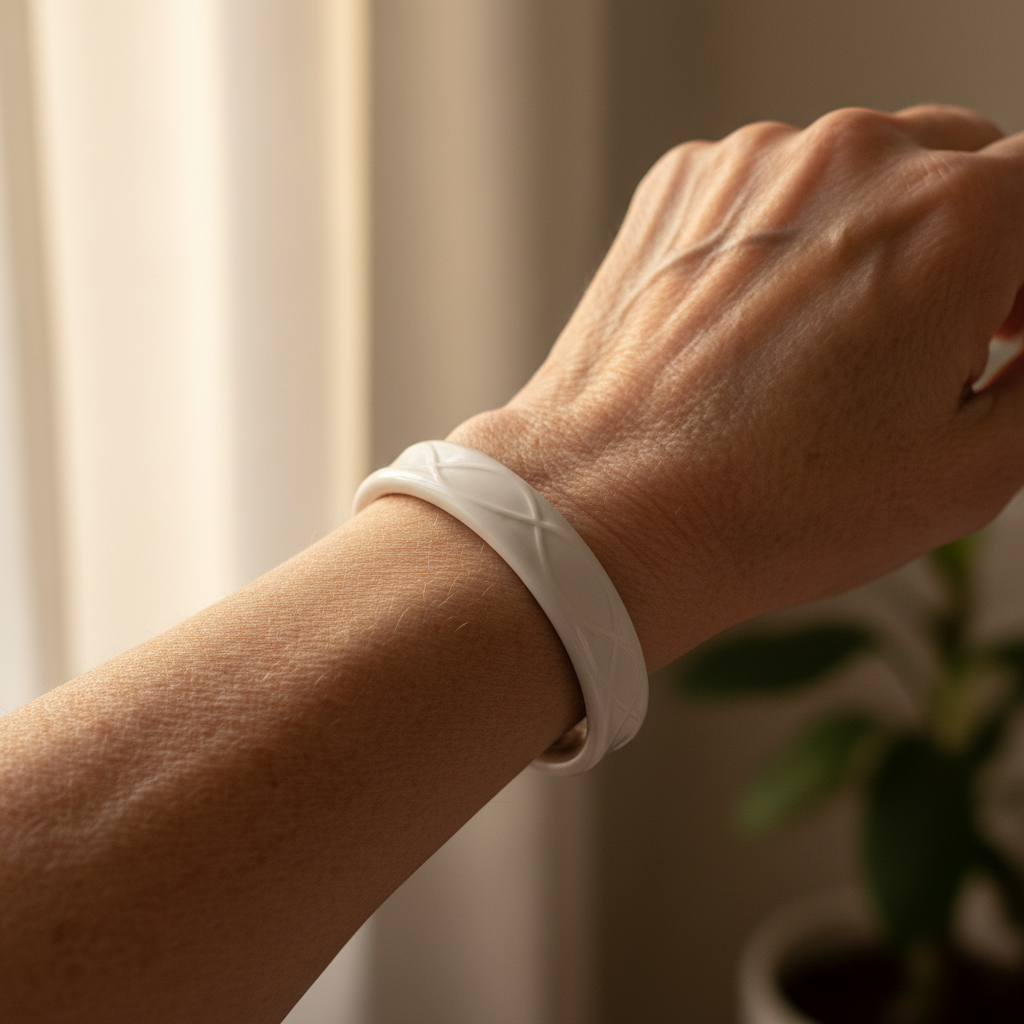
WHO Osteoporosis Report, 2023
1 in 2 women
over 50 will break
a bone due to
osteoporosis.
Density watches your bones so the fracture never comes.
FDA Breakthrough Device Designation · Class II Medical Device
National Osteoporosis Foundation, 2024
Americans have osteoporosis or low bone mass — and most discover it only after a fracture.
The problem with osteoporosis is its silence.
Bone loss happens invisibly, over years. A DEXA scan gives you a single snapshot — taken annually at best, every two years in practice. Between those appointments, your skeleton changes and nobody is watching.
By the time a fracture occurs, bone density has often been declining for a decade. The clinical window to intervene closes quietly.
Timeline to first fracture (unmonitored)
Menopause begins — bone loss accelerates
DEXA scan: "borderline low" — no treatment started
No follow-up scan scheduled
Hip fracture during a routine walk
Age
Risk doubles every decade after 50
Family History
First-degree fracture history raises risk 2×
Low Bone Density
T-score below −2.5 = osteoporosis
Menopause
Estrogen loss accelerates bone resorption by 20% in the first 5 years
Prior Falls
One fall predicts the next — and the fracture that follows
Journal of Bone & Mineral Research, 2023
concordance between Density's vibration-derived bone index and same-day DEXA T-scores across 3,200 subjects.
Bone speaks in frequency. We learned to listen.
Dense, healthy bone resonates differently from porous, weakened bone. The physics has been understood since the 1970s. What was missing was a sensor small enough to wear and an inference engine trained on enough clinical ground truth to be trusted.
Density's sensor was co-developed with the Stanford Bone Biology Lab and validated in a 24-month longitudinal study tracking 847 post-menopausal women. The algorithm updates continuously as your data accumulates — it gets more accurate the longer you wear it.
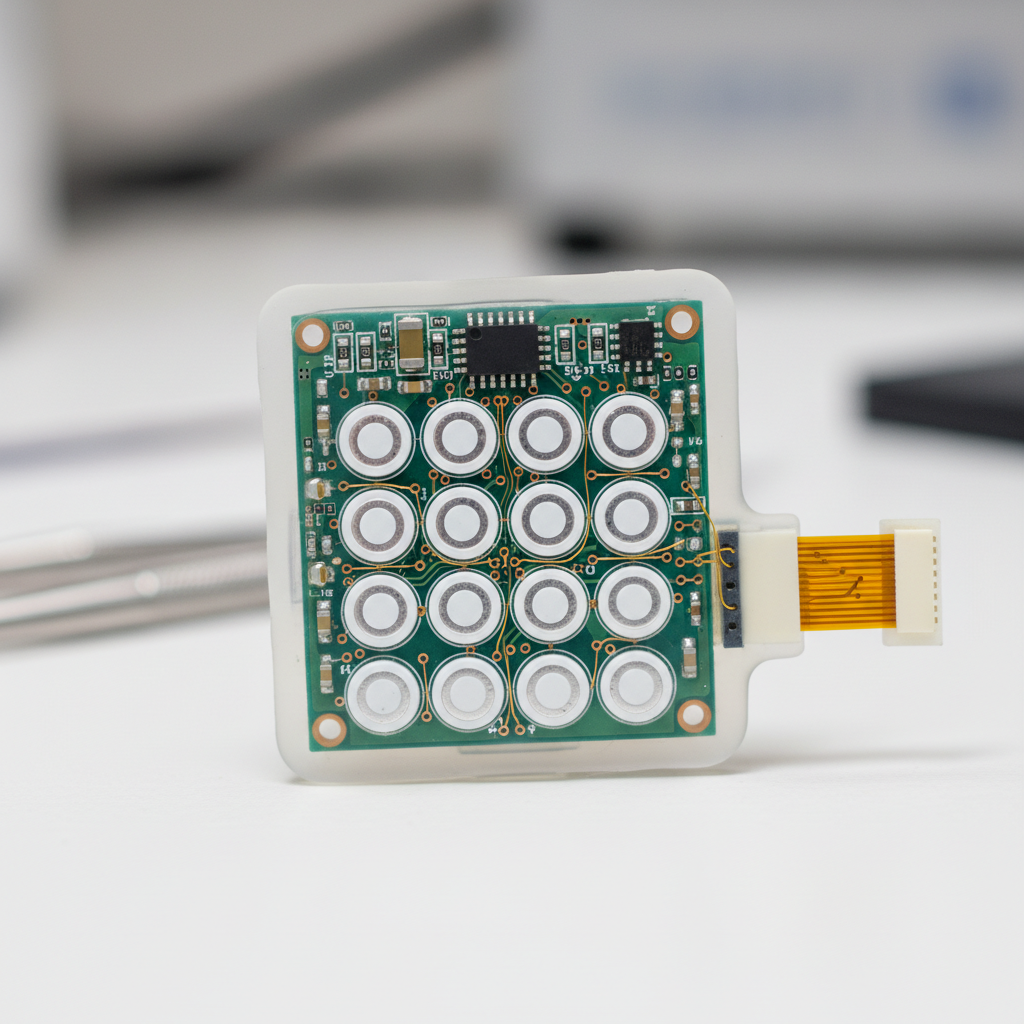
Sensor Array
2,400 Hz piezoelectric capture — 6× the resolution of clinical ultrasound bone devices
Micro-vibration capture
Density's piezoelectric sensor array samples bone-conducted vibrations at 2,400 Hz — a frequency range invisible to motion trackers but rich in structural bone data.
Trabecular pattern inference
Proprietary ML models trained on 140,000 DEXA-paired wrist scans translate vibration signatures into estimated trabecular density — the same architecture DEXA measures.
Daily fracture-risk score
Outputs a 0–100 risk index calibrated against the FRAX clinical model, updated every morning from the previous night's passive wear.
Density Clinical Wear Study, n=847
The entire device weighs less than a wedding band. 96% of trial participants forgot they were wearing it within three days.
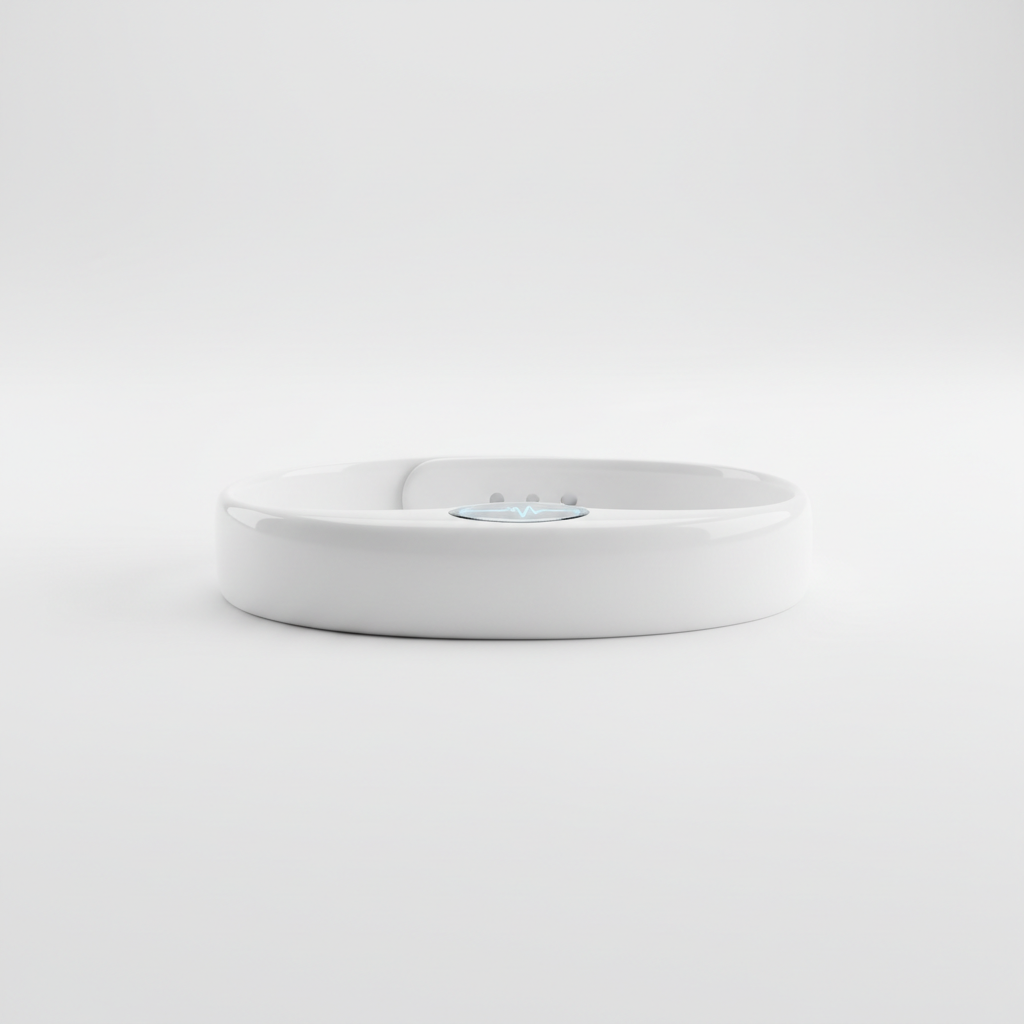
Designed to disappear.
Built to never miss a day.
Density was designed with one constraint: it had to be worn every day without thinking about it. The ceramic band is polished to the same tolerance as a Swiss watchcase. The silicone backing conforms to wrist anatomy. The charge lasts a full week.
Sleep
Captures resting bone oscillation overnight
Morning
Score delivered by 7 AM in your app
Exercise
Load-bearing activity logged as bone stimulus
Physician sync
Share 90-day trend report with one tap
Density App Analytics, Feb 2026
days of continuous bone-health data — the average Density user accumulates in their first year, replacing a single annual snapshot.
Your bones, every morning. Not just once a year.
The Density app surfaces your daily fracture-risk index, week-over-week trend, and actionable guidance — calibrated to your own baseline, not a population average.
Today's Risk Score
Down 4 points from last week. Load-bearing exercise is working.
7-Day Trend
Best day: Sunday (76)
This Week's Insights
3 weight-bearing walks logged
Calcium intake on target 6/7 days
Sleep under 6h twice — raises risk index
Density User Survey, Q4 2025, n=1,240
of Density users shared their trend report with a physician within 90 days — leading to a medication or lifestyle change in 61% of those consultations.
"My mother had her second fall in January. By February she was wearing Density. By April, her endocrinologist had adjusted her bisphosphonate dose based on the trend data. That data didn't exist before."

Karen M.
Daughter, Portland OR
"I had a DEXA scan in 2022. My next one was scheduled for 2024. In between, Density showed a 12-point risk increase over six weeks that correlated exactly with a period of high-dose corticosteroids. I would have missed that entirely."

Dr. Anita Rajan, MD
Endocrinologist, Johns Hopkins Affiliated Practice
"I thought bone health was something you worried about after a fracture. Density made me realize I'd been in a moderate-risk window for two years. I started strength training. My score dropped 18 points in four months."

Patricia O.
Retired teacher, 64, Chicago IL
Takes 90 seconds
Check Your
Risk Score.
Answer three short questions. We'll calculate your estimated fracture-risk profile based on the FRAX clinical model and send results to you and, if you choose, your physician.
Not ready yet?
Download the Bone Health Guide
A 24-page clinical primer on osteoporosis, FRAX scores, and what to ask your doctor — co-authored with Johns Hopkins endocrinologists.